Physical Address
304 North Cardinal St.
Dorchester Center, MA 02124
Physical Address
304 North Cardinal St.
Dorchester Center, MA 02124

The greatest, the least, and others in between.
The greatest, the least, and others in between.
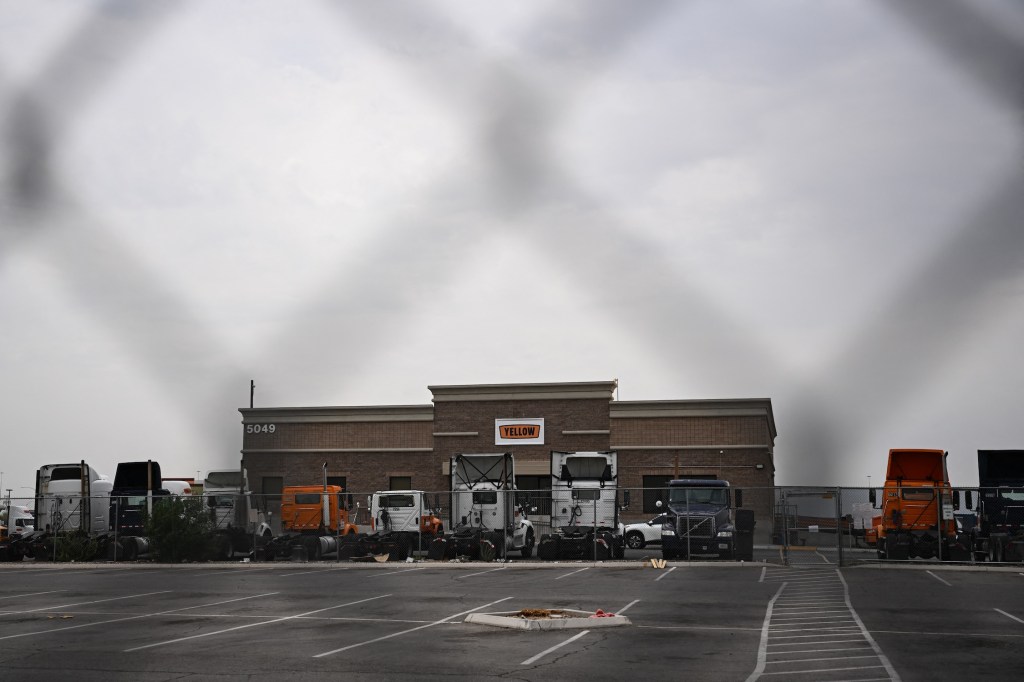
Yellow Corp.’s creditors are prepping to submit an alternative Chapter 11 proposal that would split up the defunct trucking company’s remaining $550 million in cash and put the long-running bankruptcy case to bed.
Two of Yellow’s biggest pension funds, including the Teamsters-affiliated Central States Pension Fund, have reached a deal with a creditors’ committee to come up with a new plan by the end of the week, lawyers told a Delaware bankruptcy court on Monday.
The newest plan comes as the pension funds and creditors remain at odds with Yellow’s estate over the distribution of its remaining assets, further delaying payouts to former employees and creditors alike. None of the bankruptcy proposals offered so far have garnered sufficient creditor support to proceed.
Yellow officially filed for bankruptcy in August 2023, a week after the less-than-truckload (LTL) provider ceased operations. But the time since has been dominated by litigation that has been costly for those involved. Committee attorney Meredith Lahaie said last year that Yellow’s bankruptcy was costing roughly $20 million a month, indicating the estate was wasting time fighting the various pension claims instead of settling the disputes in court.
Yellow’s bankruptcy advisors received the proposal Friday, and are still reviewing the deal, according to the company’s lead counsel Patrick Nash.
No details have been made public and the proposal has not yet been shared with the company’s biggest shareholders, including largest investor MFN Partners.
According to Nash, Yellow will try to compromise. “Any plan we move forward with that isn’t supported by MFN and [others] is going to be hotly contested and it’s going to be heavily litigated,” he added.
“I don’t know that I can tell you that I am” optimistic, Nash told U.S. Bankruptcy Judge Craig Goldblatt during the hearing. “But I’m not pessimistic either.”
Some parties are more pessimistic, particularly pension funds that feel they have been on the outside looking in to the committee’s proposal.
“A sufficient majority are getting together, trying to come up with something that they’re then going to try to impose on the not-cool kids, if you will—the people who are not in those negotiations,” said Andrew Leblanc, a partner at restructuring law firm Milbank Group, which represents six other pension claimants.
Yellow’s pension funds still remain embroiled in an adjacent legal fight with the estate over $6.5 billion in liability claims. While five of the funds say Yellow owes them a combined $540 million for withdrawing from their plans when it shut down, the court ruled last month that the funds set the insolvent LTL’s withdrawal liability too high.
Central States Pension Fund has previously argued that Yellow’s efforts to avoid this liability are motivated by maximizing returns for MFN Partners, a hedge fund which acquired more than 40 percent of the company’s shares in the weeks ahead of the company’s bankruptcy.
Late in January, the creditors’ committee filed a motion to terminate Yellow’s exclusive right to file the Chapter 11 plan. That plan included full recoveries to former employees, who are due paid time off and commissions, and to secured creditors holding unimpaired claims. Other claims, including general unsecured claims, would see much lower recovery amounts under that plan.
On Monday, the committees’ lawyers said the new Chapter 11 proposal would grant partial recoveries to unsecured creditors, including a $917 million contract claim to Central States Pension Fund.
Yellow’s back-and-forth with its creditors and pension funds follows the estate’s class action settlements with its former employees. The bankruptcy court ruled that the trucker was not liable for providing late notice to 22,000 union employees when it shut down.
That ruling came down to the fact that the company had no longer operated as a business enterprise once it stopped making deliveries—therefore, it was no longer covered by the WARN Act. The Teamsters have since challenged that ruling.
Additionally, Yellow has sold its most valuable properties while under court supervision and is still in the process of finding buyers for its remaining assets, namely its terminals. Two separate auctions were held in late 2023, reeling in an extra $1.88 billion and $82.9 million through the sale of 130 and 23 of Yellow’s owned and leased terminals, respectively.
By bits and pieces, the company has sold off its real estate through private sale transactions to former competitors like Estes Express Lines and Knight-Swift.
Yellow still plans on hosting a three-day auction process that will take place from March 25-27. The initial binding bid deadline ahead of the auction is March 21 at 5 p.m.