Physical Address
304 North Cardinal St.
Dorchester Center, MA 02124
Physical Address
304 North Cardinal St.
Dorchester Center, MA 02124

The greatest, the least, and others in between.
The greatest, the least, and others in between.
“Big news,” Peter Majeranowski, president of Circ, wrote on LinkedIn on Wednesday. “The T2T Alliance is here.”
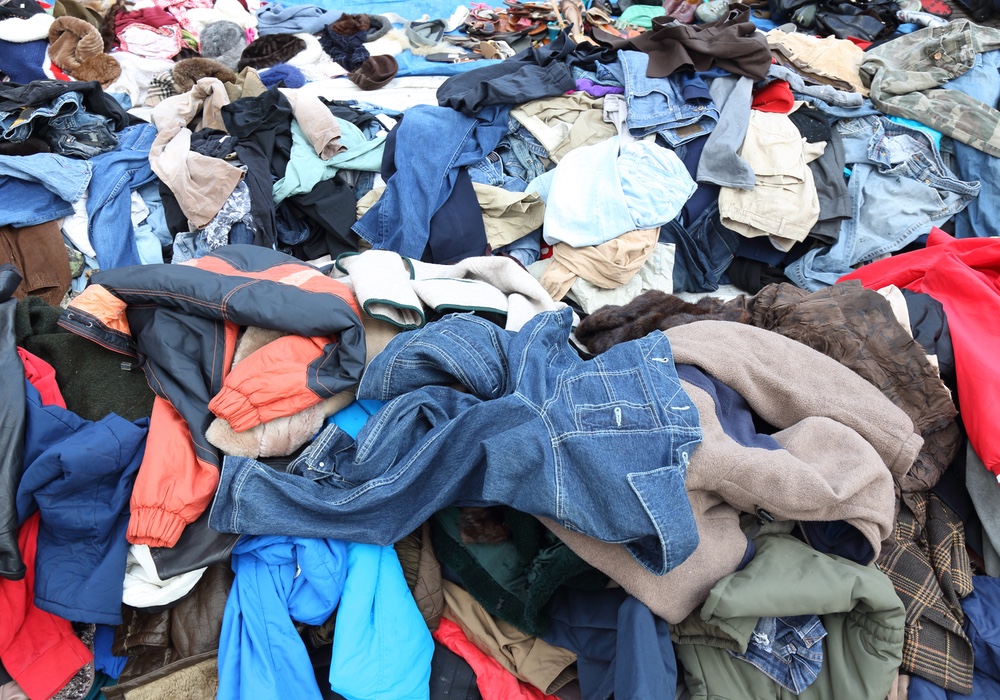
T2T is an acronym for textile-to-textile, which is to say, textile-to-textile recycling. Circ aside, members of the new industry association include Circulose (née Renewcell), Syre, and Sanko’s Re&Up Recycling Technologies. They are among the biggest names that are trying to render obsolete the widely quoted Ellen MacArthur Foundation statistic that only 1 percent of clothing produced is recycled into new clothing. The technologies they tout promise next-generation versions of lyocell, polyester and cotton that don’t rely on deforestation, agriculture or fossil fuels.
This isn’t about competition, said Luke Henning, Circ’s chief business officer. Circ, Circulose, Re&Up and Syre might “operate in the same space, but no single company can solve this challenge,” he wrote on the social media platform, referring to the mounting piles of textile waste that are either incinerated, landfilled or left to rot in the global South. “Creating a viable system for textile-to-textile recycling will take alignment across the industry. The priority now is making sure the foundation is solid—policies that drive action rather than just compliance, frameworks that move the needle.”
Circ, which is headquartered in Virginia, knows all about collaboration. It was only in January that the company linked arms with innovation platform Fashion for Good and forestry nonprofit Canopy to launch a consortium known as Fiber Club. The idea behind this, Circ said, is to scale and fast-track the adoption of its recycled lyocell and polyester through a four-step process that includes sampling, pilot collections and long-term offtake agreements. So far, brands and manufacturers such as Arvind, Bestseller, Birla Cellulose, Eileen Fisher, Everlane and Zalando have signed up.
Circ and Re&Up are also members of American Circular Textiles, a U.S.-focused lobbying group that includes textile-to-textile recyclers Evrnu and Reju, along with resale and rental companies such as ThredUp, The RealReal, Rent the Runway and Vestiaire Collective. Executives from the organization recently took a trip to Capitol Hill to push for stronger textile circularity and manufacturing policies, including incentives for nearshoring and de minimis reform.
The T2T Alliance will take more of a Eurocentric stance by ensuring that textile-to-textile recyclers play a role in shaping European Union policy. It’ll advocate for textile-to-textile recycled content and recyclability as central requirements of the EU’s proposed ecodesign for sustainable products regulation, argue for flexible verification methods for tracing recycled materials and seek a closed-loop approach that includes post-industrial, pre-consumer and post-consumer waste.
The organization will also debunk misconceptions, such as what it says is the assumption that allowing post-industrial waste to fulfill recycled content targets would make overproduction more attractive.
“We’ll be working directly with EU institutions, contributing to public consultations, and making sure policies aren’t just well-intentioned—they actually work in the real world,” Majeranowski said. “This is about working together to remove barriers, set the right foundation and make sure textile-to-textile recycling actually delivers on its potential.”
Dennis Nobelius, CEO of Syre, which is backed by H&M Group’s sizeable coffers, cited the Ellen MacArthur Foundation figure as a reason to act now. Geopolitical turmoil and the glut of cheap clothing is pushing Europe’s textile sorting and recycling sector on what some have characterized as the “brink of collapse.” A recent deal between the European Parliament and Council to enact rules requiring large fashion businesses to pay to clean up their garment waste, is a rare bright spot that can “greatly influence the acceleration of circularity in the sector and empower textile-to-textile recycling as a future standard solution,” he said.
But frameworks are important, Henning said. Environmental campaigners, for instance, have criticized the EU’s zero waste framework for lacking ambition and tangible targets. Without seeking direct input from the companies developing the solutions, the world’s largest single market runs the risk of well-meaning regulations failing to translate into positive real-world impacts, he added.
There is also concern that material innovators won’t be able to hit commercial scale—and stay there—without regulatory support that provides both carrots and sticks to encourage uptake because of potential issues with pricing, performance and supply chain integration. Renewcell infamously filed for bankruptcy a year ago because of a dearth of demand that could only sustain capsule collections. As corporations begin rowing back their sustainability targets because of economic uncertainty and the mainstream intrusion of right-leaning politics, other firms are struggling to rustle up funding and nail down the commitments that can change the status quo.
“The T2T Alliance exists to advocate for policies that support real circularity—ones that require recycled content, ensure recyclability is built into design and recognize the full scope of textile waste, from post-industrial to post-consumer,” Henning said. “Regulations need to be practical, scalable, and structured to help brands and recyclers meet sustainability targets in a way that works.”