Physical Address
304 North Cardinal St.
Dorchester Center, MA 02124
Physical Address
304 North Cardinal St.
Dorchester Center, MA 02124

The greatest, the least, and others in between.
The greatest, the least, and others in between.
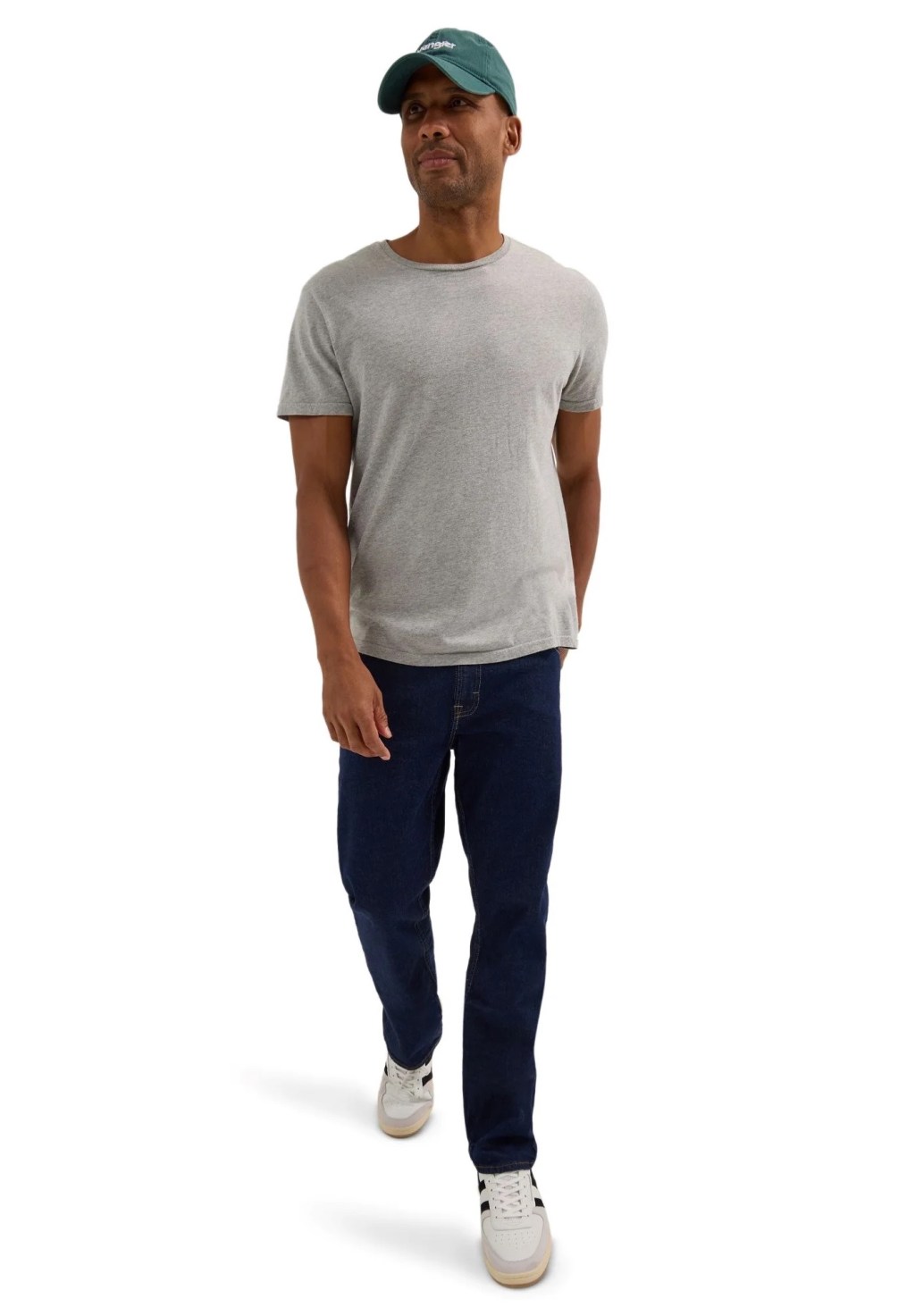
A new Wrangler jean debuting at Walmart showcases the mainstream potential of a circular supply chain.
The Kontoor Brands-owned launched the Wrangler x Accelerating Circularity jean on Monday, a men’s straight fit jean available in black and indigo, made with mechanically recycled post-consumer and post-industrial cotton.
The $39.99 jean contains 26 percent recycled cotton (50 percent post-consumer, 50 percent post-industrial), as well as virgin cotton and elastane for stretch. Kontoor Brands-owned Wrangler announced last April that was joining Accelerating Circularity to develop a new 5-pocket jean from upcycled denim.
Accelerating Circularity, an action-oriented nonprofit focused on textile-to-textile recycling systems at commercial scale, said the collaboration with Wrangler set a new benchmark for post-consumer recycled content in commercially available denim.
Breakthroughs include cross-brand collaboration for standardized yarn and fabric specifications, which allowed trials to meet supply chain minimum order quantities; an “unprecedented level” of post-consumer mechanically recycled cotton in commercial denim product; and products that passed commercial performance tests benchmarked against major brand standards.

Wrangler x Accelerating Circularity
The collection was made possible through collaboration across the textile supply chain trial members that share a commitment to sustainability. Bank & Vogue collected post-consumer waste and Martex collected post-industrial waste. Mechanical recycling was done by Giotex and Estopas. Parkdale Mills produced the yarns, and Cone Denim produced the fabrics.
As part of Accelerating Circularity’s U.S.-based trials, 23 tons each of post-consumer and post-industrial cotton were successfully recycled. The group’s next major goal is recycling 325 tons of post-consumer cotton, polyester and man-made cellulosic materials.
“This launch is a proof point that circularity is not just a concept—it’s happening now,” said Karla Magruder, founder of Accelerating Circularity. “Through collaboration across the supply chain, we’ve shown that used textiles can become a viable feedstock for new products at scale.”