Physical Address
304 North Cardinal St.
Dorchester Center, MA 02124
Physical Address
304 North Cardinal St.
Dorchester Center, MA 02124

The greatest, the least, and others in between.
The greatest, the least, and others in between.
A done-and-dusted European Union rule that requires large businesses to tackle environmental violations and human rights abuses in their supply chains might not be so done—or dusted—after all.
The landmark legislation, known as the corporate sustainability due diligence directive, or CSDDD, narrowly passed into law in May after a last-minute lobbying blitz by member nations such as Germany and France resulted in a much-diluted plan that critics say will hold fewer corporations accountable when it starts to take effect in July 2027. Now, it could be litigated again, including across the Atlantic.
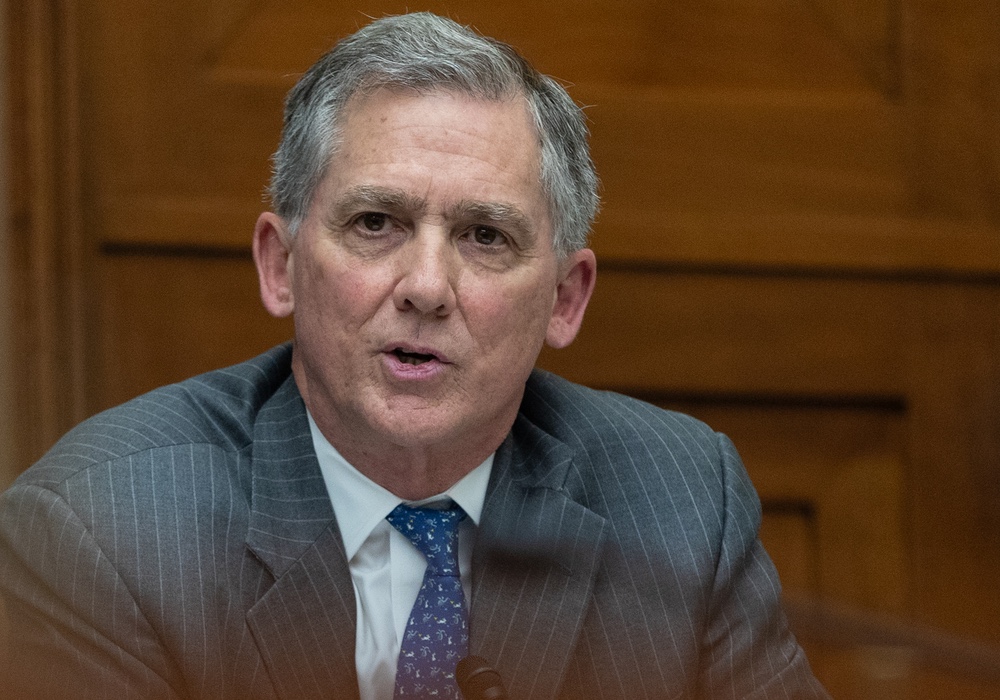
French Hill, a Republican congressman from Arkansas and chairman of the House Financial Services Committee, told the American Council for Capital Formation last week that he saw the CSDDD as a non-tariff barrier to trade. He said that the law will not only reduce “already anemic growth rates” in Europe but also “disproportionately hurt” American businesses through what he regards as an extraterritorial overreach.
The CSDDD, which takes a phase-in approach over several years, considers “in scope” the 6,000 or so EU companies that employ at least 1,000 people and generate 450 million euros ($471 million) or more in global turnover. But it also applies to the roughly 900 non-EU companies that earn the same from the bloc, meaning they’ll also have to bear the costs of running a due diligence process that discloses and remedies environmental and human rights offenses.
“I think America wants to be engaged with our colleagues in Europe on so many issues, but we have to make sure that we put our own interests first, and not confuse what harmonization is,” Hill said. “You’re creating another standard that could see our biggest companies with their sales and leadership disqualified from financing or disqualified from business outside the U.S., and that’s not keeping with what we’ve tried to have in a post-World War II context.”
He likened the CSDDD to the 2010 Dodd-Frank Wall Street Reform and Consumer Protection Act, which requires U.S. companies to divulge to the Securities and Exchange Commission their use of conflict minerals and ensure they are responsibly sourced.
“They cannot do it. They can’t effectively prove that they’re in compliance with that SEC rule…at any reasonable cost,” Hill said. “I fight so much against that sort of thing, no matter what the administration is, Republican or Democrat, because they’re always wanting to tell business how to do things.”
Even so, the Trump administration has been making inroads with its deregulatory agenda as part of its so-called ”government efficiency” slash and burn. Earlier this month, the acting chair of the SEC, Mark Uyeda, said that the financial regulator was pausing its defense of a climate change disclosure rule whose adoption last year was being challenged in court by business interests. Hill said that the CSDDD should be another White House priority, either diplomatically through the State and Treasury Departments or on an open docket at the U.S. Trade Representative.
“I’d recommend that the best thing Congress can do is that we work together, preferably on a bipartisan basis, and urge the inbound Trump administration to make this a priority in their bilateral visits and multilateral visits,” he said.
The United States would have to get in line. Sustainability regulation continues to be a bone of contention even in the EU, which is poised to unveil an omnibus package that it says will streamline legislative tentpoles—chiefly, the CSDDD, the corporate sustainability reporting directive and the taxonomy for sustainable activities—but detractors worry will further reduce reporting requirements and embolden right-leaning, anti-bureaucratic forces.
On Wednesday, nearly a dozen sustainability and labor rights organizations that work in apparel supply chains, including Amfori, Cascale, the Ethical Trading Initiative, the Fair Labor Association, the Fair Wear Foundation, the German Partnership for Sustainable Textiles and the Social & Labor Convergence Program, released a joint statement reaffirming their support for a “robust and pragmatic implementation” of the EU sustainability due diligence framework that will “level the playing field across global supply chains.”
“Legal certainty is essential, not only for businesses to operate effectively within the EU market but also for our global trading partners to engage with EU businesses,” they wrote. “This certainty also promotes greater opportunities for labor and environment stakeholders to effectively engage with companies on supply chain activities that impact them.”
But despite the compromises they were offered last year, France and Germany have continued to throw up blockades against harmonized requirements that would supersede their own environmental and human rights due diligence laws—the same ones that had distinguished them as frontrunners in the space.
In January, French European affairs minister Benjamin Haddad urged the European Commision to delay the CSRD by two years and suspend the CSDDD indefinitely, writing on X that “companies need simplification, not additional administrative burdens.” The previous month, the German government called for a similar postponement of the CSRD, proposing, at the same time, several amendments that would water down disclosure obligations and raise coverage thresholds. It, too, said that its 11th-hour plea was to “avoid unnecessary burden for businesses.”
Still, lightening that yoke could have other consequences, 75 civil society organizations, including the Bangladesh Center for Workers Solidarity, the Cambodian Alliance of Trade Unions and Workers Right Watch in Kenya, said in a joint statement this week. In it, they expressed their dismay at the EU possibly making a “backdoor deal” without consulting affected communities in the global South most affected by harmful business practices.
“We have seen firsthand how voluntary initiatives have failed to end business practices that harm people and the environment, particularly in our countries,” the organizations wrote. “While the CSDDD is not perfect, it is a unique opportunity to expand mandatory due diligence laws across the world. Key provisions—such as the binding nature of due diligence, the inclusion of civil liability and administrative sanctions, and the coverage of adverse impacts throughout the value chain beyond Tier 1 suppliers—are essential to safeguarding workers and the environment.”
The organizations also disputed the assertion that delaying the regulations will help economic growth or international trade. “On the contrary,” they said, doing so will only “perpetuate a status quo in which companies are incentivized to turn a blind eye on the harms caused by their operations and value chains.”
“Even before it came into force, many of us have been able to leverage the CSDDD to engage with businesses in our countries, leading to better practices on the ground. Others use it as a model to follow when we advocate for better protections for workers and the environment in our own countries,” the letter added. “The competitiveness of the European economy should not rely on business practices that profit from social and environmental exploitation in our countries.”