Physical Address
304 North Cardinal St.
Dorchester Center, MA 02124
Physical Address
304 North Cardinal St.
Dorchester Center, MA 02124

The greatest, the least, and others in between.
The greatest, the least, and others in between.
The Red Sea crisis took a bizarre turn Monday in a U.S. national security blunder that occurred more than 6,000 miles away from the conflict-ridden waterway.
The Trump administration accidentally leaked plans to strike the Yemen-based Houthis to a journalist mere hours before the series of airstrikes occurred on March 15.
Jeffrey Goldberg, the editor in chief of The Atlantic, revealed the news in a 3,500-word report Monday. Goldberg had apparently accidentally been invited to a group chat on the encrypted messaging platform Signal by U.S. National Security Adviser Michael Waltz.
Alongside Waltz, prominent members of President Donald Trump’s cabinet were in the chat including Vice President JD Vance, Secretary of Defense Pete Hegseth, Director of National Intelligence Tulsi Gabbard and Secretary of State Marco Rubio, among others.
According to Goldberg, Hegseth posted operational details of the forthcoming strikes on Yemen, including information about targets, weapons the U.S. would be deploying and attack sequencing—all while Goldberg remained in the group chat.
After Goldberg left the chat, National Security Council spokesperson Brian Hughes confirmed to him that the contents of the chat were factual.
Early Tuesday, President Trump defended Waltz, saying he “has learned a lesson, and he’s a good man.”
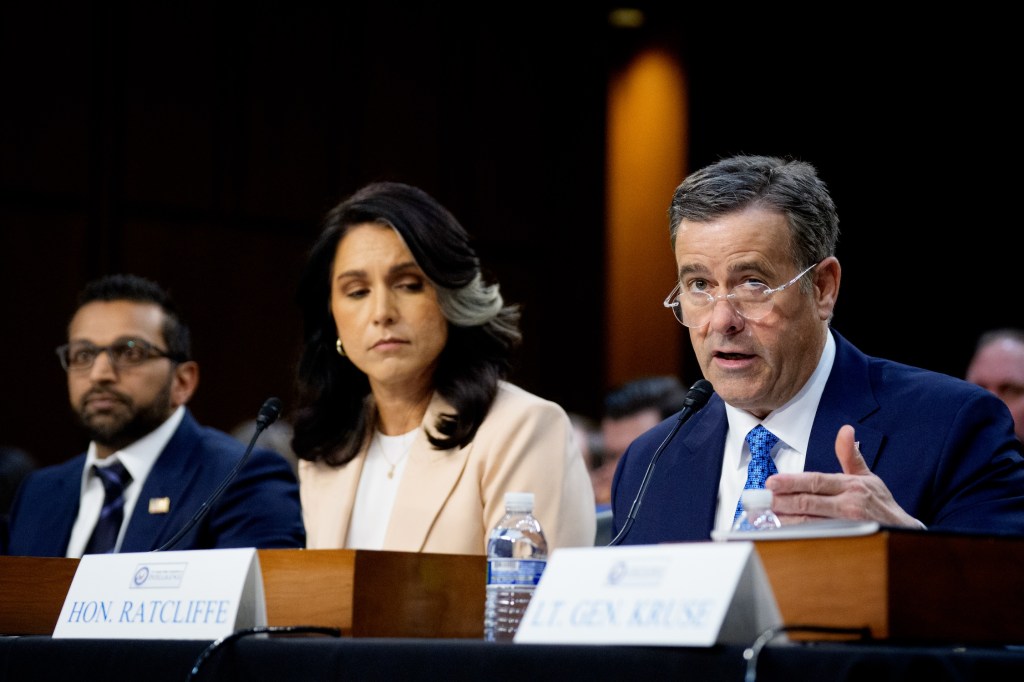
Multiple Democratic lawmakers grilled both Gabbard and Central Intelligence Agency director John Ratcliffe on the chat during a Senate Intelligence Committee meeting held Tuesday. Both downplayed the mishap by saying the information revealed had not been classified—a claim several Democrats pushed back against.
Perhaps the most interesting aspect of the group chat was Vance’s admitted opposition to “bailing Europe out again” when discussing the plans to strike Houthi targets, despite acknowledging Trump’s desire to “send a message.”
“I am not sure the president is aware how inconsistent this is with his message on Europe right now,” Vance said the day before the airstrikes, in a rare departure from Trump’s positions.
Waltz, minutes later, said “it will have to be the United States that reopens these shipping lanes.”
Hegseth agreed with both parties, calling European “free-loading…PATHETIC,” but referred to the reopening of shipping lanes as a “POTUS directive.”
As the drama in Washington unfolds, the Red Sea returned to a state of uncertainty after the Houthis promised to resume attacks on Israeli ships throughout the region due to a blockade of aid to Gaza. Then the situation escalated further with Israel breaking its two-month ceasefire with Hamas shortly after.
With the renewed hostility in the region, major carriers have made it known that they will not resume passage through the Red Sea until there is guaranteed safety for all ships involved.
Ocean carriers have instead continued to divert ships away from the Red Sea in favor of the Cape of Good Hope, and have maintained the longer transit times that buoyed freight rates in 2024 and helped the firms generate outlandish profits.
Due to the continued diversions, transit times from southeast Asia to the U.S. East Coast increased by 47 percent from the first Houthi attack in November 2023 to February 2025, according to data from Project44. The southeast Asia to Europe route had a 33 percent longer time, while China-to-Europe transit times have risen by 25 percent.
As of the last week of February, Red Sea transit volumes are still down 71 percent, according to Clarksons Research. That figure accounts for categories like tankers and dry bulk vessels that haven’t always conducted mass diversions, meaning container shipping’s transit volumes have a steeper decline.
The Suez Canal, and by proxy, Egypt, has taken plenty of financial hits due to the lack of traffic.
Earlier this month, Egypt’s president Abdel Fattah el-Sisi said the monthly losses of the Suez Canal revenues totaled around $800 million due to the situation.
Sisi said in December the disruption cost Egypt around $7 billion in less revenue from the Suez Canal in 2024.
In February, the Suez Canal Authority (SCA) stressed a return to stability during the ceasefire, before Israel’s attacks in Gaza broke the pact.
Despite the worsening conditions, the authority appears to be pitching to shipping companies that it is safer to return, highlighting in a Tuesday statement “the current challenges remain temporary.”
Citing data from global trade intelligence platform Kpler MarineTraffic, 166 vessels adjusted their routes to transit through the Suez Canal instead of using the Cape of Good Hope route since the start of February. Half of the E.U.’s fuel shipments in March have transited through the Suez Canal during the ceasefire period, the authority said.