Physical Address
304 North Cardinal St.
Dorchester Center, MA 02124
Physical Address
304 North Cardinal St.
Dorchester Center, MA 02124

The greatest, the least, and others in between.
The greatest, the least, and others in between.
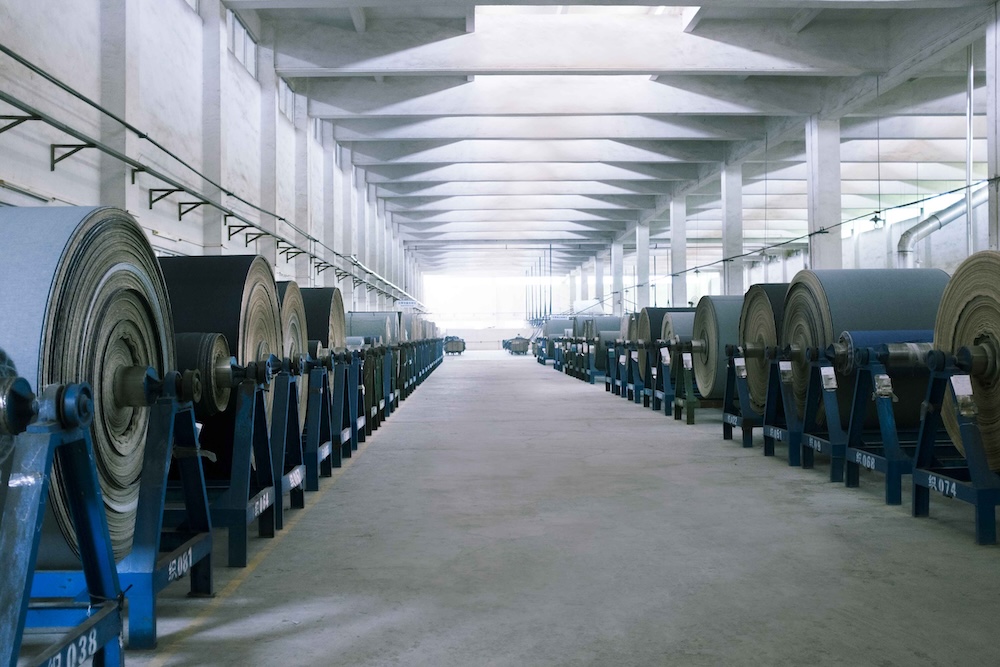
Since 1986, fully integrated textile manufacturing company Panther Denim has been committed to delivering high-quality denim in its home market of China.
Following decades of success domestically, Panther Denim eventually incorporated Tat Fung Textile Co. as a subsidiary in 2010 to manage its growing international business. This “strategic move” helped Panther expand beyond its core market and meet the increasing global demand for denim, the company noted.
Fast-forward to today, and Panther Denim now produces over 60 million yards of denim fabric, 36 million yards of piece-dyed fabric and 12 million yards of printed fabric per year and employs more than 2,000 people worldwide.
“We have been leveraging our expertise as a denim producer for decades to develop a denim supply chain that goes beyond basic offerings,” said Tim Huesemann, sales director at Panther Denim. “Our goal is to create a sustainable denim supply chain that delivers both quality and innovative products.”
Continuing its rapid growth, Panther Denim plans to keep scaling its operations, starting with a Cambodia expansion. Toward the end of 2025, the company will unveil a new factory near Phnom Penh—the capital of Cambodia—designed with a focus on renewable energy, recycling and a closed-loop waste system, which Huesmann describes as “one of our most sustainable factories.”
“Panther Denim’s transformation goals include improving speed of innovation and finding new, engaging ways to improve customer satisfaction,” Huesemann said. “We recognized that coping with all these changes would require more than the traditional model. However, we believe diversifying our investment portfolio across multiple countries allows us to gain a competitive edge. By operating from multiple locations, we will be able to offer unique value propositions that other mills can’t.”
While China remains a dominant player in both denim manufacturing and consumption, Huesemann noted that Cambodia offers a “stable workforce supply,” unlike some Southeast Asian countries struggling with labor shortages and rising operational costs.
“Cambodia has significant potential for growth in denim production,” Huesemann said. “Our operations in Cambodia will be independent of our China facility, ensuring that our existing production remains unaffected.”
Another key factor in Panther’s expansion are Cambodia’s several trade agreements, which are expected to boost the company’s export sector throughout the year. This includes the Cambodia-China Free Trade Agreement (CCFTA) and the Regional Comprehensive Economic Partnership (RCEP), which will enhance access to Asian markets. The Cambodia-Korea Free Trade Agreement, meanwhile, will significantly reduce or eliminate tariffs on goods traded between the two countries, fostering stronger trade and investment.
“Expanding in Cambodia gives us the opportunity to tap into a growing market while continuing to prioritize sustainability and innovation in every aspect of our operations,” Huesemann said.
To learn more about Panther Denim and stay up to date on its expansion plans, click here.